


Frequently Asked Questions
The questions parents ask us most, answered honestly. Don’t see yours? Ask us anything — or better, come ask in person on a tour.
Programs & Curriculum
What is the Montessori method?
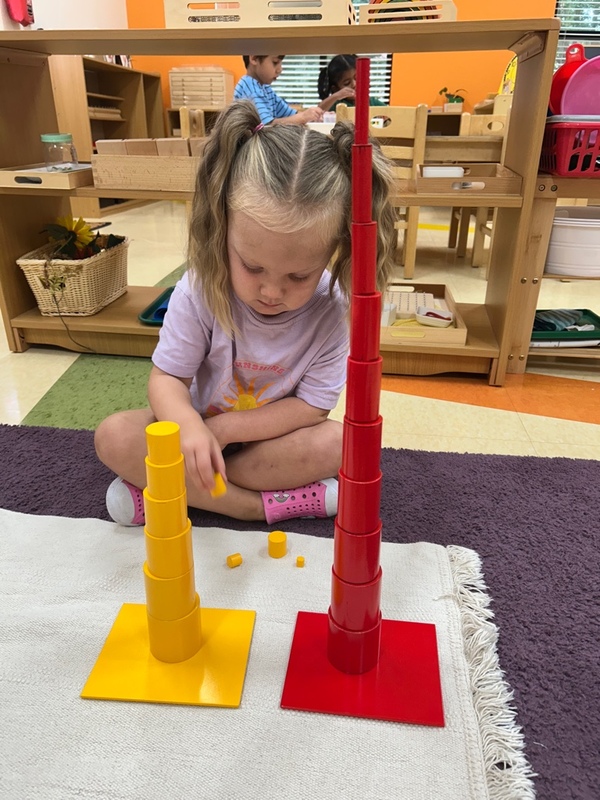
Montessori is a child-led approach to education developed by Dr. Maria Montessori, a physician who opened her first classroom in 1907. Instead of one teacher delivering the same lesson to the whole room, children work in a prepared environment of specially designed hands-on materials, choosing meaningful work and progressing at their own pace while a trained guide observes and presents each next lesson at the right moment. Mixed-age classrooms, long uninterrupted work periods, and materials that move from concrete to abstract are its signatures. For the full story — including the method’s history and teacher certification — see our Curriculum page.
What ages do you serve?
We serve children from 6 weeks through Kindergarten. Our classrooms progress from Nido (infants, 6 weeks–18 months) and Pre Casa (toddlers, 18–36 months) through a Transition class, our 3s program, and Casa / Early Childhood, culminating in Pre-K I and Transitional Kindergarten / Pre-K II for children preparing to start elementary school.
What makes Montessori different from a regular daycare?
Where traditional care often moves every child through the same checklist at the same speed, Montessori honors each child’s individual pace and natural drive to learn. Children choose meaningful work in a prepared environment, mixed-age classrooms foster mentorship and empathy, and success is built on genuine mastery rather than stickers or gold stars. Read more on our Montessori Advantage page.
What does my child actually do all day?
Days blend teacher-planned and child-initiated activities across language, math, practical life, sensorial work, cultural studies, music, movement, art, and building — with regular meals, outdoor play, and rest woven into a consistent routine. Long, uninterrupted work periods let children sink into deep concentration, which is where real development takes root.
How do you prepare children for Kindergarten?
Our Transitional Kindergarten / Pre-K II program begins each school year in conjunction with Frisco ISD, for children who will start Kindergarten the following year. Literacy, math concepts, and writing are integrated into hands-on, project-based learning, and children take on real responsibilities — choosing learning activities, helping prepare the room — that build the independence school demands.
How do children move up to the next classroom?
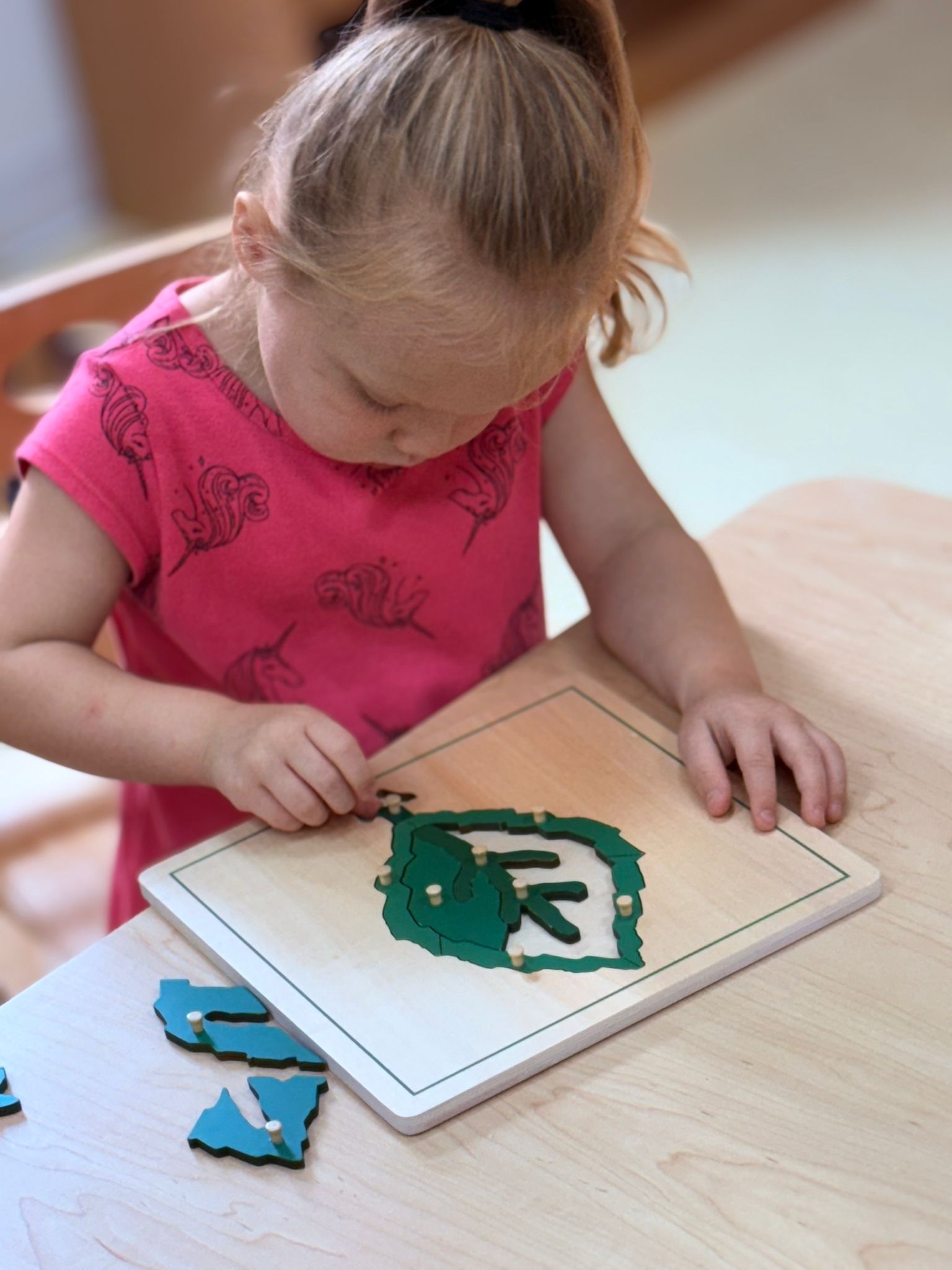
There’s no formula and no rush. A child must reach the minimum age for the next room, and we look for readiness signs — potty training, eating skills, motor development, and social-emotional growth. Transitions are discussed with parents well in advance, your child “visits” the new class first, and the Director approves every move.
Do you offer music, art, and other enrichment?
Yes — art is a daily staple (we favor process art over cookie-cutter crafts), and our weekly music class is a highlight that children find both uplifting and calming. Enrichment programs across arts, music, language, and physical development are available for all ages.
Do children use screens or tablets?
Children under two have no screen time at all, per Texas licensing standards. For older children, screens may only supplement planned, education-aligned activities — never more than one hour per day, never during meals or rest, and never as a substitute for active play, hands-on learning, or teacher interaction.
Daily Life
What are your hours?
We’re open Monday through Friday, 7:00 AM to 5:30 PM (full-day programs provide up to 10 hours of care). We ask that children arrive by 9:00 AM so they don’t miss the heart of the morning curriculum. We close for major holidays and follow Frisco ISD closures for inclement weather.
What do the children eat?
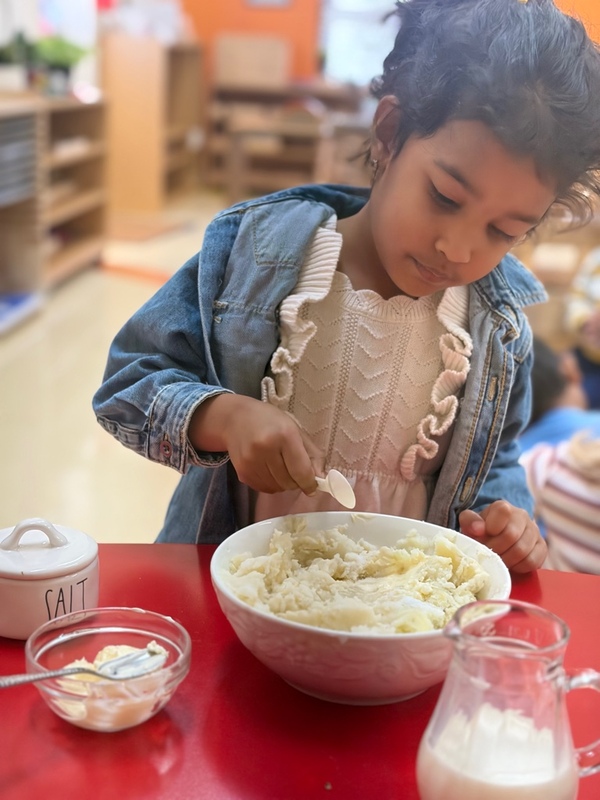
We provide breakfast, lunch, and two snacks daily — lunch is catered by KidzCaters on a rotating four-week menu, with a vegetarian option every day and fresh fruit and milk with every lunch. Meals are prepared with minimal salt, sugar, and fat, and monthly menus are posted near the lobby. See a sample menu here.
My child has a food allergy. How do you handle it?
We are a nut-free school. Notify us of any allergy or dietary restriction in writing; for food allergies we require a physician’s written statement and an Allergy Action Plan before your child’s first day. We also accommodate dietary restrictions based on religion or culture with a written note from you.
Do children nap during the day?
Children 12 months and older who are in care five or more hours get a supervised rest period after lunch — typically about two hours. Children must rest for at least an hour but are never required to sleep; once others are asleep, awake children move on to quiet activities.
Do you help with potty training?
Yes — our Transition class (beginning around 2½ years) makes potty training a central focus, working in partnership with what you’re doing at home, and children move up to the 3s program once they’re fully potty-trained. Accidents are treated matter-of-factly with a calm change of clothes (that’s one reason two spare sets stay in every cubby) — both Texas licensing and our own discipline policy strictly prohibit any punishment connected to toileting.
What should my child wear and bring?
Comfortable play clothes for art, playground, and climbing, with closed-toe rubber-soled shoes — and please label everything with your family name. Keep two full sets of extra clothes at school. Toys stay home, with one exception: a soft comfort item for nap time is welcome in your child’s cubby.
Health & Safety
How do you keep the building secure?
Doors are locked at all times — each family receives a personal key fob, and visitors must ring the bell. Parents check children in and out daily with a fingerprint system in the lobby, and children are released only to adults you’ve authorized, with photo ID verified for anyone we don’t recognize.
Can I check on my child during the day?
Any time. Video cameras cover every classroom, and each family receives secure login access to view their child’s room from a computer or phone throughout the day. You’ll also receive a daily email with the details of your child’s day — meals, naps, activities, and photos. And parents are always welcome to visit in person during operating hours, no appointment needed.
What are your teacher-to-child ratios and class sizes?
Every classroom is staffed to meet or exceed the Texas Health and Human Services licensing ratios for its age group, with the youngest rooms kept smallest — and because Montessori teachers work through individual and small-group lessons, children get one-on-one attention well beyond what a ratio number captures. Just as important is who is behind the ratio: our infant teachers have been with Creative Minds nearly since our founding, more than ten years ago, so the same trusted caregivers greet families year after year. Exact class sizes vary by season and enrollment, so ask on your tour and we’ll share the current numbers for your child’s room. The Director also weighs current class sizes and ratios before approving any child’s move to the next classroom.
What is your approach to discipline?
Positive guidance only: praise and encouragement, clear expectations, redirection, and — when needed — a brief, supervised calm-down break limited to one minute per year of the child’s age. Corporal punishment, humiliation, and punishment tied to food, naps, or toileting are strictly prohibited. We treat behavior as communication and partner with families on consistent, individualized support.
What happens if my child gets sick at school?
We’ll contact you right away to pick your child up, and we document and share any concerns. Children with a fever of 100.4°F or higher stay home until fever-free for 24 hours without medication; vomiting or diarrhea requires 24 symptom-free hours. You’ll always be notified of any communicable illness in your child’s group.
Can you give my child medication?
Yes, with a completed Medication Authorization form (filled out by you, as Texas requires). Medication must be in its original labeled container with your child’s name, and we administer it exactly as the label states, only to the child it was prescribed for.
Enrollment & Tuition
How do I enroll my child?
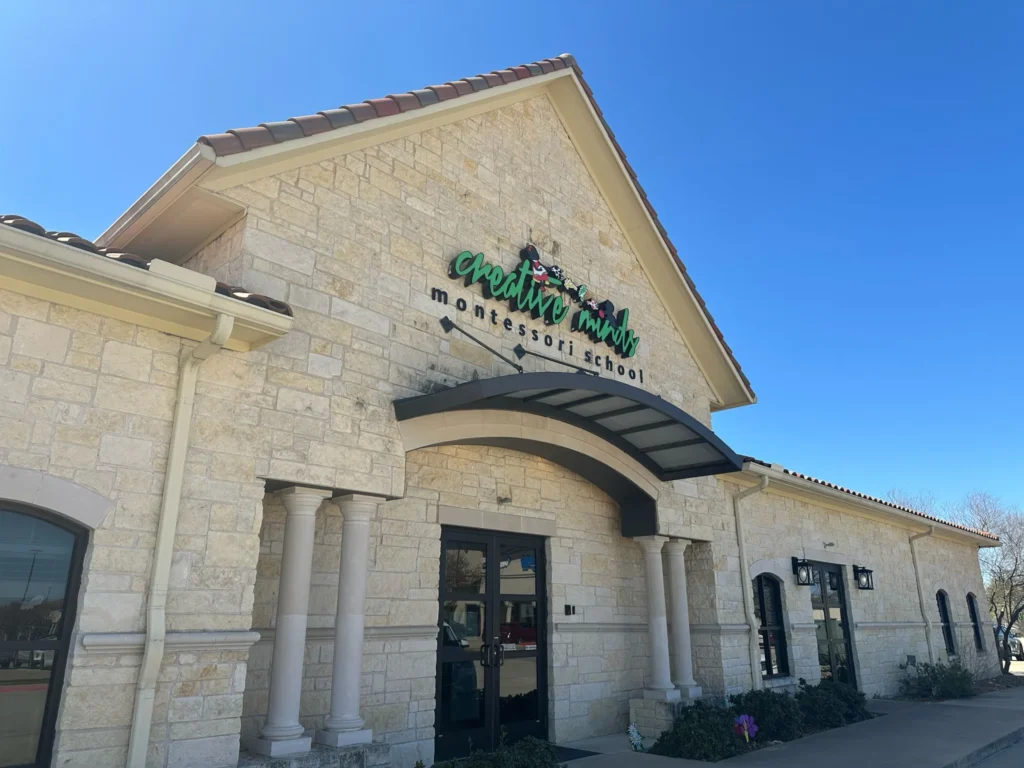
Start with a tour — visit our classrooms, meet our teachers, and ask us anything. Before starting, we invite your child to spend a Discovery Day with us. Enrollment paperwork includes forms, current immunization records, a physician-signed health statement, and fingerprint/PIN setup for pick-up. Request a tour here, call 972-338-4304, or email director@creativemindsfrisco.com. You’ll find us at 5115 Warren Parkway — behind Dua Trattoria, at the Legacy Drive & Warren Parkway intersection.
Is there a waitlist? How far ahead should we enroll?
Availability varies by classroom and season, and infant spots typically fill fastest — so we recommend touring early, even months before you need care. The Director can tell you exactly what’s open for your preferred start date and add you to the list for your child’s age group if a room is full. Once enrolled, your child’s place is protected: families can hold a spot through extended breaks (a one-time hold-spot fee per leave: $250, or half of one month’s tuition for infants) and tuition for absences of a week or more is prorated with one month's written notice.
How does tuition work?
Tuition is based on your child’s age and billed monthly. There’s a $200 Annual Registration Fee per child, charged at enrollment and each September 1, and a $150 supply fee twice a year — the Spring supply fee in March and the Fall supply fee in September. Families enjoy a sibling discount, and our referral program gives you and each family you refer $250 off tuition once they complete their first full month. For current rates, contact the Director — we’ll help you find the right program first.
How can parents be involved?
As much as you’d like. Formal parent-teacher conferences happen each November/December, but our door is open year-round for meetings, questions, and concerns. Parents may visit any time during operating hours without prior approval, nursing mothers have a private space to breastfeed, and anyone can volunteer at the center or on field trips after completing pre-certification and a background check.
Still curious? The full details behind these answers live in our Parent Handbook & Operational Policies — or schedule a tour and ask us in person.