



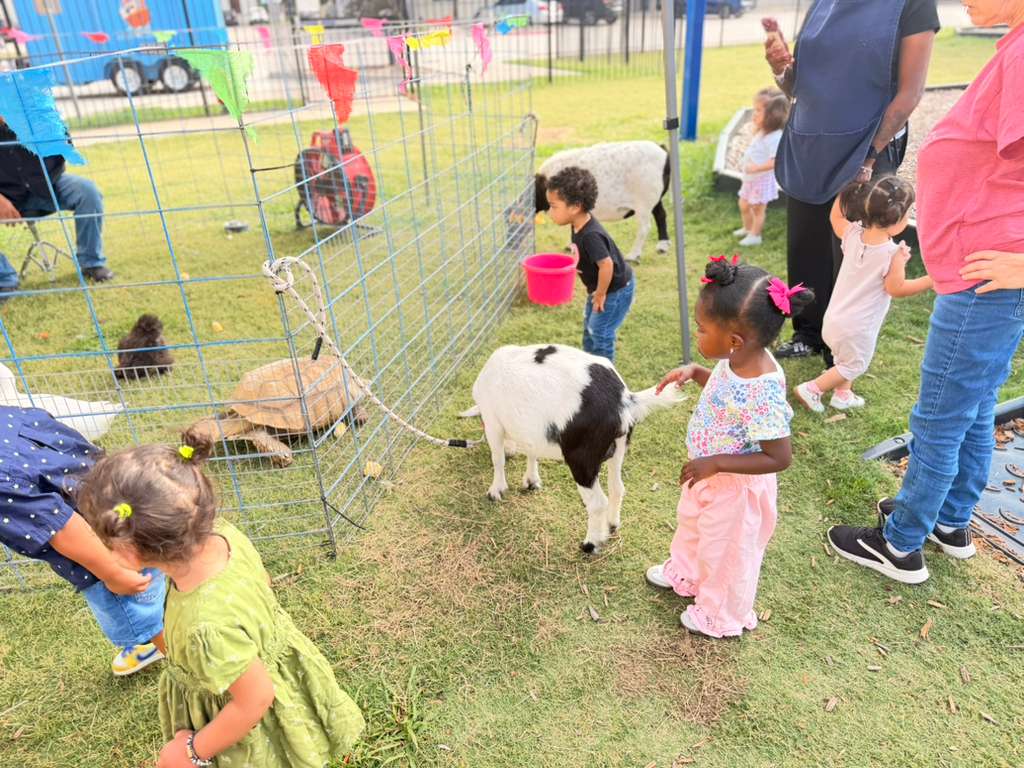
The crying at the door is normal — and it's actually proof the attachment worked. It's most common from about 9 to 18 months and usually fades by age two or three. The moves that help are small and boring: one short, consistent goodbye ritual, an honest "I'll be back after nap," and a quick, confident exit — never sneak out. Add a childcare team that tells you how the rest of the day really went, and most door-tears take care of themselves. If daily distress is still intense past age three, or keeps your child from functioning, check with your pediatrician. (Not medical advice.)
The problem, in real voices
A father had to literally peel his sobbing child off his shin so the teacher could carry them inside. Then he walked to his car and sat in silence, gripping the wheel, wondering if he was traumatizing his child for the sake of a paycheck.
A mother spent the morning stalking the daycare's update app, refreshing every thirty seconds for a photo of her son. When it finally appeared — him grinning over a block tower — she felt a physical release of tension she hadn't realized she was carrying since the door.
And one toddler looked up with enormous watery eyes and said, "Don't go, Mommy — I miss you when you're gone." That mother spent her entire lunch break staring at a wall, feeling like the villain in her own life.
Here's the scene those parents didn't get to watch: in almost every case, the crying stopped within minutes of the door closing, and the child went off to play. The goodbye moment is the peak of the distress — not a preview of the day. The rest of this guide is about why that's true, and how to make the peak smaller.
What's really going on underneath
The engine under drop-off tears is a milestone worth celebrating: object permanence. Once a baby understands that people still exist when out of sight, a parent leaving registers as a real loss — but the child hasn't yet learned the second half of the lesson, that "gone" reliably means "coming back." Some babies show it as early as four or five months; most develop robust separation anxiety around nine months; and many toddlers hit a second wave at 15 to 18 months, just as mobility and independence surge. That's the paradox worth savoring: the anxiety is the flip side of a mind that just got more capable — growing autonomy sharpens the awareness of separation. The typical arc runs from onset in the six-to-twelve-month range, a peak in toddlerhood, and a long fade by age two or three.
The reframe every exhausted parent deserves: children's hospital guidance describes this as very normal and as evidence your child has formed an attachment and misses you. The crying is proof the bond worked. A few things turn the volume up — hunger, tiredness, illness, any "off" day, and every transition (a new caregiver, a new room, the return after a vacation or a sick week resets the clock). And one more driver hides in plain sight: you. Research repeatedly links parental separation anxiety to child separation anxiety — a tense, lingering, visibly worried goodbye teaches a child that there is, in fact, something here to fear. Which is why so much of what helps below is really about the adult's half of the goodbye.
Attachment Is Ancient — the Daycare Camera Is Not
The distress of separation is one of the oldest observations in child psychology — John Bowlby built attachment theory itself on it, noting that children show profound separation anxiety even when every physical need is met. Proximity-seeking is a built-in behavioral system, not a modern parenting artifact. (One honest nuance: attachment research grew from a Western, nuclear-family lens, and cultures with rich extended-family caregiving have always spread the "secure base" across more shoulders — the need is universal; the arrangements aren't.)
What's genuinely new is the tether. The daycare live camera, marketed as anxiety relief, frequently delivers the opposite: a silent, context-free feed where your child sits alone for ninety seconds and your imagination writes the whole tragic backstory — one parent spirals at the same footage that eases another parent's guilt. And the smartphone gives the "overwhelming urge to call, text, or just go pick them up" an instant outlet, which feeds the loop instead of breaking it. Where tech genuinely helps is mediated reassurance: a teacher's quick "she settled in five minutes, then painted for an hour" text, a photo with context, even a recorded voice message from you as a modern transitional object. The line is simple: an update from a caring adult helps; unsupervised surveillance-watching hurts.
How parents usually try to fix it — and the catch
Three of the most common moves, honestly:
- The sneak-out — slipping away while they're distracted. The upside: it avoids the public meltdown and the guilt spike, and it feels kinder in the moment. The catch: it backfires harder than anything else on this list. The child turns around to find you vanished — and learns that you can disappear at any moment without warning. The result is more vigilance and more clinging, not less, and trust erodes with each repeat. Every reputable source lands in the same place: always say goodbye; never sneak out.
- The long goodbye — lingering, hovering, coming back for one more hug. The upside: it feels loving and responsive, and honestly, the extra hug is for you too. The catch: it prolongs and intensifies the distress, and returning mid-cry restarts the entire cycle. A protracted goodbye broadcasts that this separation is genuinely dangerous — why else would the grown-up be unable to leave?
- Bribes and over-soothing — or the guilt-flip into brusqueness. The upside: "there's a treat after school" can buy a quieter exit today. The catch: bribes teach that drop-off is something requiring compensation — in other words, bad — and build no coping. The opposite failure is just as common: guilt curdles into irritation and a rushed shove through the door, which reads to the child as rejection. The middle path every source converges on is calm firmness: validate the feeling, keep it brief, leave confidently.
And the bonus modern backfire: compulsive camera-watching as a coping tool. It feels like control; it delivers anxiety.
How two parents often experience it differently
The research here is genuinely mixed — some studies find mothers carry more separation anxiety in the early months with the gap closing by 18 months; others find similar levels in both parents with different underlying mechanisms — so hold all of it loosely. The pattern that is worth acting on shows up in daily life regardless of gender: one caregiver tends to run anxious-and-lingering, the other brisk-and-matter-of-fact — and each judges the other. The anxious one reads the brisk one as callous; the brisk one is sure the anxious one is feeding the meltdown.
Here's the useful, slightly unfair truth: at the door, the brisk instinct is usually the more helpful one, because a calm, predictable, confident goodbye is precisely what shrinks the child's fear. So play to strengths as strategy, not judgment — let the steadier parent handle drop-off where possible, and route the reassuring photo-and-text updates to the parent who worries, who is doing their own hard work of waiting. Agree on one shared goodbye ritual so the child gets the identical sequence no matter who's at the door. Single parents don't get the handoff — the move there is to enlist the center as the steady second adult, explicitly. And in same-sex, blended, and multigenerational families, the same steadier-softer split appears without any gendered script — including grandparents, who may need gentle looping into the ritual so love doesn't turn into lingering.
Better ways that actually work — introduced gently
The theme across all three: predictable, honest, brief. The child needs to learn one sentence with their whole body: my person leaves, and my person comes back.
1. Build one short goodbye ritual — and never vary it
A fixed ritual works because it gives the separation a known shape — a beginning, a middle, and an end — so it stops feeling random, and random is what reads as dangerous to a small child. This is the same predictability principle that runs through every Montessori room: a child who knows exactly what happens next doesn't have to brace for it. The ritual itself should be almost embarrassingly small: a hug, a kiss, one fixed line, a special handshake or a wave at the window — twenty seconds, identical every single time. Pair it with an honest return promise told in child time, not clock time: "I'll be back after nap," "after outside play" — units a two-year-old can actually feel.
Then comes the hard half: leave promptly, pleasantly, and don't come back for one more hug, because returning mid-cry restarts the whole cycle. Rehearse the handshake or the window-wave at home for a few days first, as a game — so the ritual is already familiar and fun before it has to carry the weight of a real goodbye. This works from about nine months through preschool; a baby gets the same sequence with more holding, a preschooler can help design the handshake (ownership is soothing). Give it two weeks of perfect consistency before judging. The saboteur is variance — a long goodbye Monday, a quick one Tuesday, a sneak-out Wednesday teaches the child to monitor you harder, because the rules keep changing.
2. Practice separations early — and send a piece of home along
Separation is a skill, and skills need reps at low stakes before the big test. Graduated practice — brief, survivable separations that end in reunion — teaches a child experientially what no explanation can: parents leave and reliably come back. Start small and early, ideally weeks before day one of care: step out of the room and return cheerfully; leave the child an hour with a trusted adult; stretch it gradually. If you can, visit the new center together a couple of times so the first real drop-off isn't also the first time the child has seen the room or the teacher — meeting a new caregiver with you present lets the child borrow your trust before they have to run on their own.
The second half of the method travels in the backpack: a transitional object — the lovey, a small family photo, even a recorded voice message — carries "home" into the new place and gives the child something to hold when they can't hold you. Tell the teacher the lovey's name; it's a colleague now. By age: an infant needs the practice reps and a familiar-smelling comfort item; a toddler benefits most from the photo-in-the-cubby; a preschooler may just need the ritual plus the knowledge that the lovey is available in the bag. The mistake that undoes it is making day one the first-ever separation — a child who has never once watched you leave and return is being asked to learn object permanence's hardest lesson at the worst possible moment.
3. Validate the feeling, then hand off into an activity
Pure distraction dismisses the feeling; pure soothing marinates in it. The method that respects both the emotion and the child's capability is validate-then-redirect: name what's happening in one calm sentence — "You're sad I'm leaving. I'll be back after nap." — and then hand the child to a teacher who guides them into a chosen activity: blocks or the book corner, painting or the puzzle. Naming the feeling makes it manageable (a feeling with a name is smaller than a nameless dread), and the choice of activity gives the child's energy somewhere to go, plus a shred of the control the whole situation stripped away. What you're modeling is profound: hard feelings can be held, and life continues.
Set it up so the redirect has something to land on: pre-teach feeling-words at home in calm moments ("sometimes we feel sad, and it passes"), and talk up a specific activity on the drive in — "I wonder if the paint easel is out today" — so the child walks in with a destination. Resist the bribe and the over-explanation; one sentence of validation beats five minutes of negotiation. This is a toddler-and-preschool method — infants get the ritual and the steady handoff instead — and its saboteur is the parent who validates and then stays, turning the acknowledgment into a second goodbye. Say the sentence, make the handoff, trust the teacher, go.
From the child's side
From inside, the math is simple and terrible: the most important, safest person in the world is walking away, and nothing in their short experience yet proves that "gone" means "back soon." It can feel like genuine abandonment — even mid-play, even in a room they like. The crying is communication, not manipulation; a toddler cannot yet strategize with your guilt. Remember, too, that this storm is powered by the very growth you've been celebrating — object permanence, independence, a mind newly able to miss someone. The body speaks what the child can't: clinging, tantrums, withdrawal, sometimes stomachaches before separations — stress signals, not defiance. What the child is slowly building, rep by rep, is an internal model: my person leaves, my person returns, and in between, another caring adult keeps me safe. Honest goodbyes and predictable rituals are the bricks of that model. Sneaking out knocks it down — it makes disappearance random, and random means the child must watch you always. And the reassuring truth from the other side of the door: most children who cry hard at the goodbye settle within a couple of minutes and go play. The tears are the peak, not the day.
Drop-Off Is a Handoff — Make It One Team
Drop-off is a handoff, which makes it the purest test of the home-center partnership. A good program helps in visible ways: it runs your same short goodbye ritual and reassuring language so the child gets one coherent message; its teachers are trained observers who can tell two minutes of crying-that-resolves-into-play from genuine distress, and they carry a real toolkit — a nurturing hug, redirection into a chosen activity, pairing the newcomer with a confident buddy. A calm, predictable, child-scaled room lowers baseline anxiety all by itself, and mixed-age groups let a nervous newcomer watch the older kids treat the place as obviously safe. Good programs also offer a phase-in — shorter days at first, a settling-in period, early pickups in week one — because adjustment is a process, not a light switch: expect one to two weeks of tears and one to two months to fully settle.
A weak program fails in equally visible ways: pure "drop and let them cry" with zero acknowledgment, staff who handle goodbyes differently every day, silence after drop-off (the vacuum that obsessive camera-refreshing rushes to fill), and turnover that makes the child re-attach to a stranger every few months. So run the communication three ways. You → the center: the child's triggers (hunger and nap windows, a recent illness, a new sibling), the exact goodbye ritual you use, the lovey's name, and what you're practicing at home. The center → you: the honest read-out — "cried four minutes, then painted for an hour" — context the camera can never give — plus a flag if the distress isn't easing day over day. And the child, looped in: told truthfully what will happen and when you return, given small choices (which lovey, which first activity) so they hold a piece of control, and included in the ritual as a participant, not a package. The one question that reveals any center: How do you handle the first two weeks and a crying drop-off — and how will I hear how my child actually did? A confident, specific answer is the green flag.
When the Tears Don't Fade by Preschool
This is not medical advice — talk to your pediatrician about your child. The baseline: separation anxiety in the nine-to-eighteen-month range is very normal, typically fades by preschool age, and a hard goodbye that resolves into play within minutes is fine — even if it repeats every morning for a while. Worth a conversation with your pediatrician: distress that persists day after day, week after week, past about age three or well into the preschool years without easing; anxiety that interferes with actually getting to or staying at school, or with normal activities; constant worry about harm coming to a parent; refusal to leave home or be in a room alone; recurrent stomachaches or headaches clustered around separations; or panic-level meltdowns that don't respond to the routines above. For calibration: persistent separation anxiety meaningfully affects only about 3% of school-age children — possible, not typical, and very responsive to help. A pediatrician can assess, coach, and refer to a child psychologist if separation anxiety disorder is in play. Asking early is calm parenting, not alarmism.
Every Family Is Different — Trust Yourself
No single script fits every child — onset ranges from four months to eighteen, the parent research is genuinely mixed, and even the universality of the attachment model gets healthy academic debate. What survives all of it is a small set of principles: calm, predictable, brief, honest, follow through. Those are principles, not a formula — you apply them with judgment, calibrated to your child's temperament, your family's shape, and what you know soothes this particular small person. And keep the two reframes that carry parents through the hard mornings: the goodbye moment is usually the peak of the whole day, and the crying is evidence the bond worked. A child who protests your leaving is a child who knows exactly who their person is. That's not a problem to fix — it's a foundation to build the "and they come back" lesson on, one boring, consistent, loving goodbye at a time.
Related struggles
- The same fear after dark → Baby won't sleep? Why it happens and what helps.
- Choosing the team on the other side of the handoff → How to choose a daycare you trust.
- The validate-then-redirect toolkit in full → How to handle toddler tantrums.
- The parent's half of the anxiety → Working-mom guilt.
- Sweet goodbye books to pre-teach the feelings → our best books for toddlers.
Sources: HealthyChildren.org / AAP (easing separation anxiety); Children's Hospital of Philadelphia (what's normal, when to worry); Cleveland Clinic (separation anxiety in babies and toddlers); attachment research (Bowlby; PNAS universality discussion); PMC (relations between parental and child separation anxiety); Care.com (parental separation anxiety); Montessori practitioner guidance on drop-off routines; Orange Seeds Montessori (daycare cameras, pros and cons). Stories are drawn from real parents' experiences; names and identifying details have been changed for privacy.