


CASA / Early Childhood Program
(3 – 6 years)
We put CASA kids ahead with a disciplined Montessori curriculum — and a touch of Waldorf creativity.
CASA / Early Childhood Program at a Glance
| Ages | 3 – 6 years (children join the 3s program once fully potty-trained) |
| Classrooms | 3s Program → Pre-K I → Transitional Kindergarten / Pre-K II (begins each year in conjunction with Frisco ISD) |
| Hours | Monday–Friday, 7:00 AM–5:30 PM (up to 10 hours of care) |
| Curriculum | Disciplined Montessori Casa with a touch of Waldorf creativity — practical life, sensorial, language, mathematics, and cultural studies; correlated to Texas standards and Kindergarten readiness |
| Rest | Supervised rest period after lunch (about 2 hours; at least 1 hour of rest, sleep never required) |
| Meals | Breakfast, lunch, and snacks provided daily (nut-free school; vegetarian option every day) |
| Parent updates | Daily email report + live classroom camera access for parents |
| Location | 5115 Warren Parkway, Frisco, TX 75034 — behind Dua Trattoria at Legacy & Warren Pkwy |
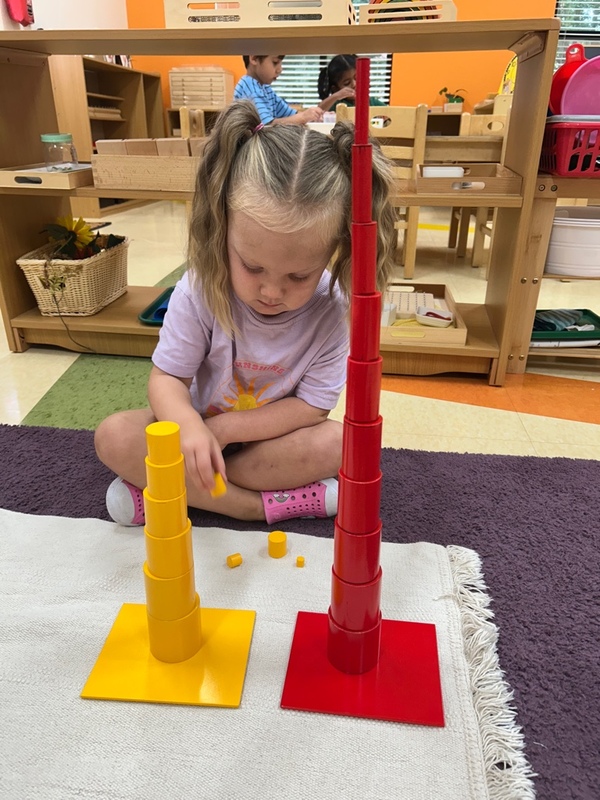
Our CASA classrooms are vibrant, peaceful spaces where children learn by doing. Through hands-on materials and individualized guidance, children explore math, language, culture, science, and practical life skills.
The Montessori environment encourages focus, independence, and a deep love of learning. Children are empowered to take initiative in their work, building confidence and critical thinking skills that last a lifetime.
These are the years a child steps into reading, mathematics, creative art, and disciplined handwork — and CASA is built to make each of those doors swing open at exactly the right moment.
Schedule a TourThe Skills a Child Steps Into at CASA
Reading & Language
Reading begins in the hands before it reaches the eyes: children trace sandpaper letters to feel each sound’s shape, then build their first words with the movable alphabet — often writing before they read, just as Dr. Montessori observed. Because each child follows the phonics sequence at their own pace, the moment of “explosion into reading” arrives naturally, without drilling or flashcards. By the time it happens, reading feels less like a lesson learned and more like a secret discovered.
Mathematics
Math at CASA is something a child can hold: golden beads make the decimal system physical, number rods turn quantity into length, and spindle boxes make even zero tangible. Children move from touching quantities to writing symbols only when the concept already lives in their fingers — which is why Montessori children so often carry an easy, unafraid relationship with numbers into elementary school. Four-year-olds here routinely build four-digit numbers with beads, not because they’re pushed, but because the materials make big numbers feel like a game.
Creative Drawing & Art
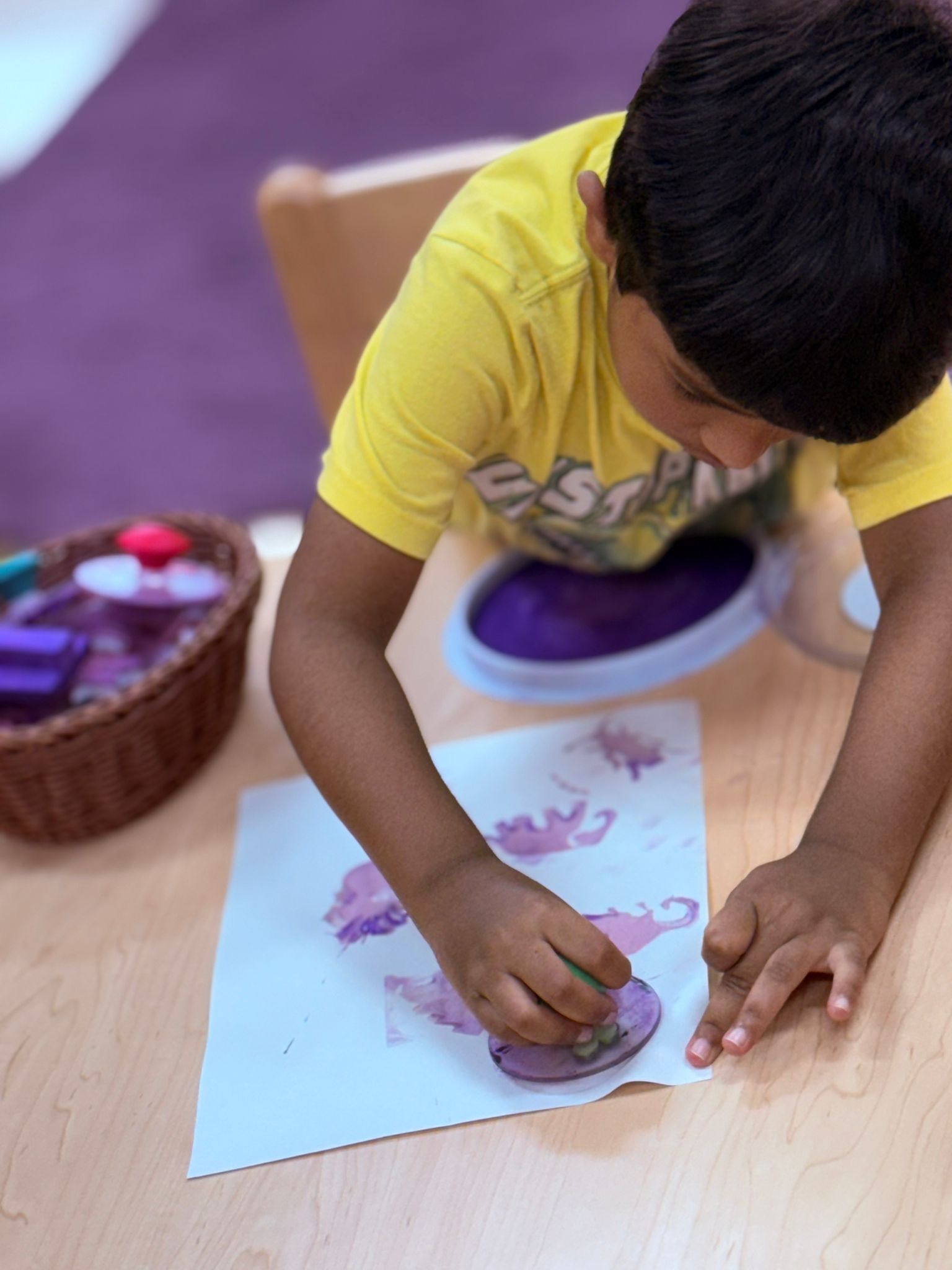
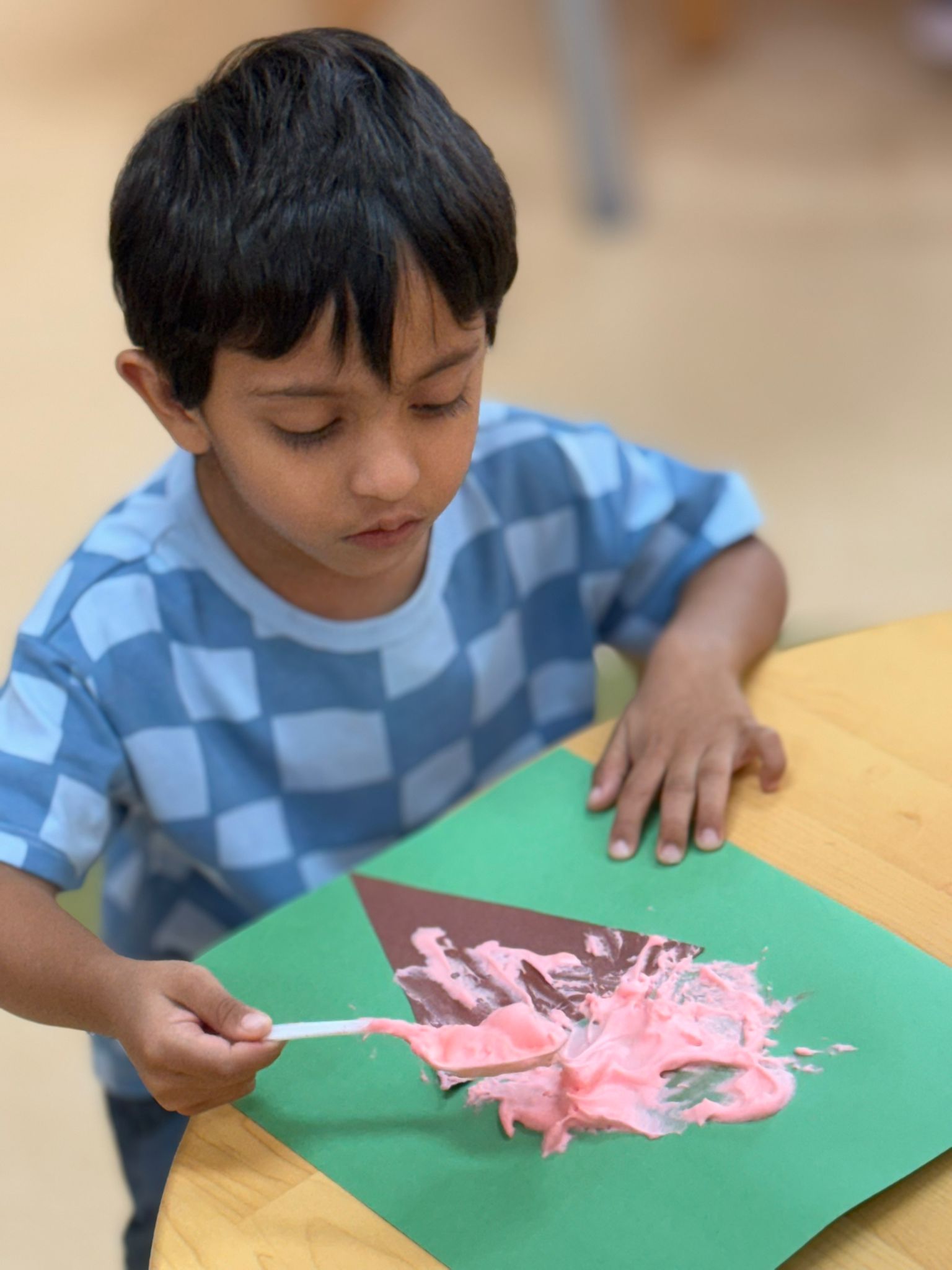
Art is a daily language in the CASA room, not a Friday treat: drawing, painting, collage, and clay give children endless ways to say what they don’t yet have words for. We practice process art — valuing the exploring, mixing, and deciding over a wall of identical crafts — so every piece is genuinely the child’s own. Along the way, each drawing quietly strengthens the same hand, eye, and planning skills that writing will soon demand.
Coloring with Discipline
There is a beloved Montessori material made precisely for this: the metal insets, where children trace geometric frames and fill them with careful, controlled strokes. It looks like coloring — it is actually training in pencil grip, lightness of touch, staying within a boundary, and finishing what you start. That blend of creativity and self-command is the bridge between art and handwriting, and children take visible pride in a frame filled edge to edge with steady lines.
Sensorial Refinement
The sensorial shelf is where children sharpen the instruments they’ll learn with for the rest of their lives — grading colors by shade, matching sounds and textures, building the pink tower and brown stair, exploring geometric solids by touch. Each material isolates one quality (size, color, sound, weight) so the child’s attention can master it completely. This is quiet work with a loud payoff: classification, comparison, and judgment — the raw skills underneath mathematics and science.
Inquisitive Minds: Science & Culture
CASA children ask enormous questions, and our cultural curriculum honors them: puzzle maps of the continents, land-and-water forms, botany and zoology materials, and simple experiments that let a child test the world rather than just hear about it. Questions are met with “let’s find out,” and curiosity is treated as the most valuable material in the room. A child who learns at four that questions lead somewhere becomes a student who never stops asking them.
A Disciplined Montessori Core, a Touch of Waldorf Creativity

What puts CASA children ahead is not one philosophy but a deliberate blend of two. The spine of the program is disciplined Montessori: a precise sequence of materials, real expectations of care and completion, lessons earned through mastery, and a classroom where order is not imposed on children but built by them. That discipline is what turns bright three-year-olds into six-year-olds who can read, calculate, and carry a piece of work from first idea to finished result.
Around that spine we keep a touch of Waldorf — a creative tradition that has been part of Creative Minds from our beginning: unhurried rhythm to the day, storytelling and song, natural materials and beauty in the environment, and generous room for imagination alongside the academic work. Waldorf classrooms famously protect childhood wonder; Montessori classrooms famously build capability. Our children get both — the discipline that puts them ahead on paper, and the creativity that makes them interesting on purpose.
Much More Than Kindergarten Prep

Yes — our curriculum correlates to developmental milestones, Texas standards, and Kindergarten readiness skills, and our Transitional Kindergarten / Pre-K II class begins each year in step with Frisco ISD. Children leave CASA reading, counting, writing, and ready. But calling this “kindergarten prep” is like calling a redwood a source of shade: true, and beside the point.
What a child actually builds here is deeper — the ability to concentrate for long stretches, to choose work and see it through, to manage their own materials and emotions, to help a younger friend and learn from an older one. Worksheet-based prep programs chase the checklist; CASA grows the learner, and the checklist takes care of itself. That’s the difference families feel years later, long after everyone else has forgotten who memorized their letters first.