

Enrichment Programs
All ages
Montessori’s nature, science, and skilled hands — Waldorf’s music, movement, and mindful stretching. Learning that sticks, because children live it.
Enrichment Programs at a Glance
| Ages | All ages |
| Offerings | Weekly music class (no additional cost), gardening & cooking, science experiments, clay & modeling, sports/PE, stretching & mindfulness, daily outdoor play |
| Schedule | Woven into the regular school day, Monday–Friday, 7:00 AM–5:30 PM (up to 10 hours of care) |
| Curriculum | Designed onsite by early-childhood experts to complement the Montessori classroom |
| Parent updates | Daily email report + live classroom camera access for parents |
| Location | 5115 Warren Parkway, Frisco, TX 75034 — behind Dua Trattoria at Legacy & Warren Pkwy |
Our enrichment programs are designed to spark joy, creativity, and emotional well-being. Each week, children participate in experiences such as music, art, gardening, movement, and mindfulness.
These offerings support the whole child — uplifting their spirits while fostering curiosity, self-expression, and a connection to the world around them.
A rhythm woven into every week:
- Weekly music & movement classes at no additional cost
- Weekly cooking and gardening activities
- Daily outdoor play
- Art woven throughout all content areas
The Montessori Thread: Nature, Science & Skilled Hands
Nature as the First Classroom
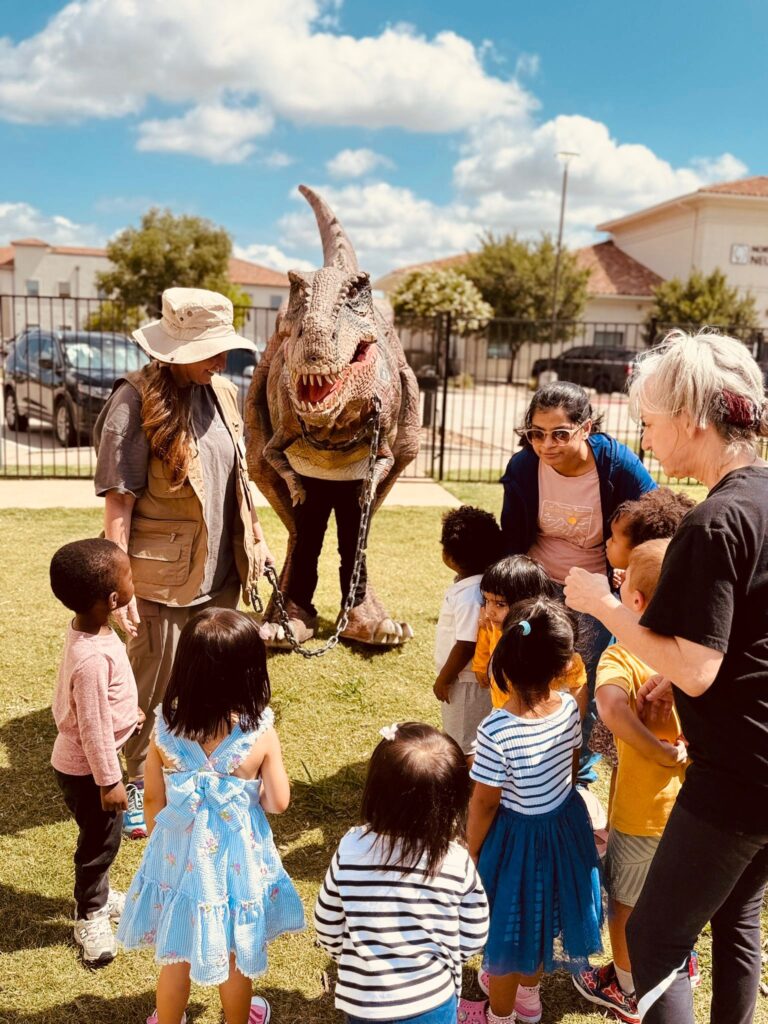
Dr. Montessori insisted that no manufactured material rivals the natural world, and our days are built around that belief. Children spend time outdoors every day in every season, watching leaves turn, clouds build, and insects work — and classroom animals bring living science right onto the shelf. A child who learns to observe nature closely at three is practicing the same patient attention that reading and mathematics will ask of them at five.
Science You Can Touch
Our science is done, not watched: sink-or-float experiments, magnets, seeds sprouting in clear cups, colors mixing before their eyes. Children predict first, test second, and talk about what happened third — the entire scientific method, sized for small hands. The habit it builds is priceless: every “why?” is answered with “let’s find out,” so children learn that questions are tools, not interruptions.
Gardening
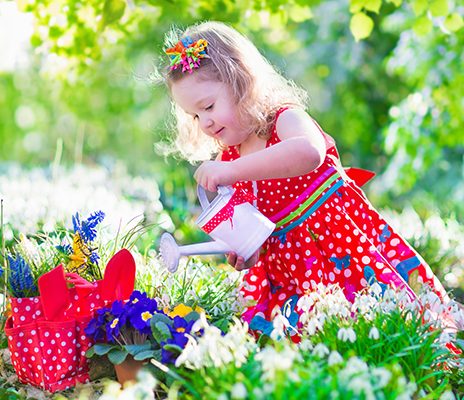
Weekly gardening puts a real, living responsibility into a child’s hands: seeds they planted, sprouts they must remember to water, harvests they get to taste. There is no better teacher of patience — a garden simply will not be rushed — and no clearer lesson in where food actually comes from. Paired with our weekly cooking activities, the full circle from soil to snack becomes something a child has lived, not memorized.
Clay & Modeling
Working clay is quiet powerhouse work: rolling, pinching, and shaping strengthen exactly the small hand muscles that pencil control will soon demand. Because clay holds any idea a child can imagine, it also builds three-dimensional thinking and planning — deciding what to make, and what to do when it slumps. And like all good handwork, it is deeply calming; a child at the clay table is a child in deep concentration.
Hands-On Sensorial Work
Sensory tables, natural textures, and graded Montessori materials give children thousands of chances to sharpen the instruments they learn with — their own senses. Sorting by shade, matching by sound, and judging by weight refine the discrimination that later underlies math, science, and language. It looks like play, and it is — the kind of play that builds a more precise mind.
The Waldorf Thread: Music, Movement & Rhythm
Music at the Heart of the Week
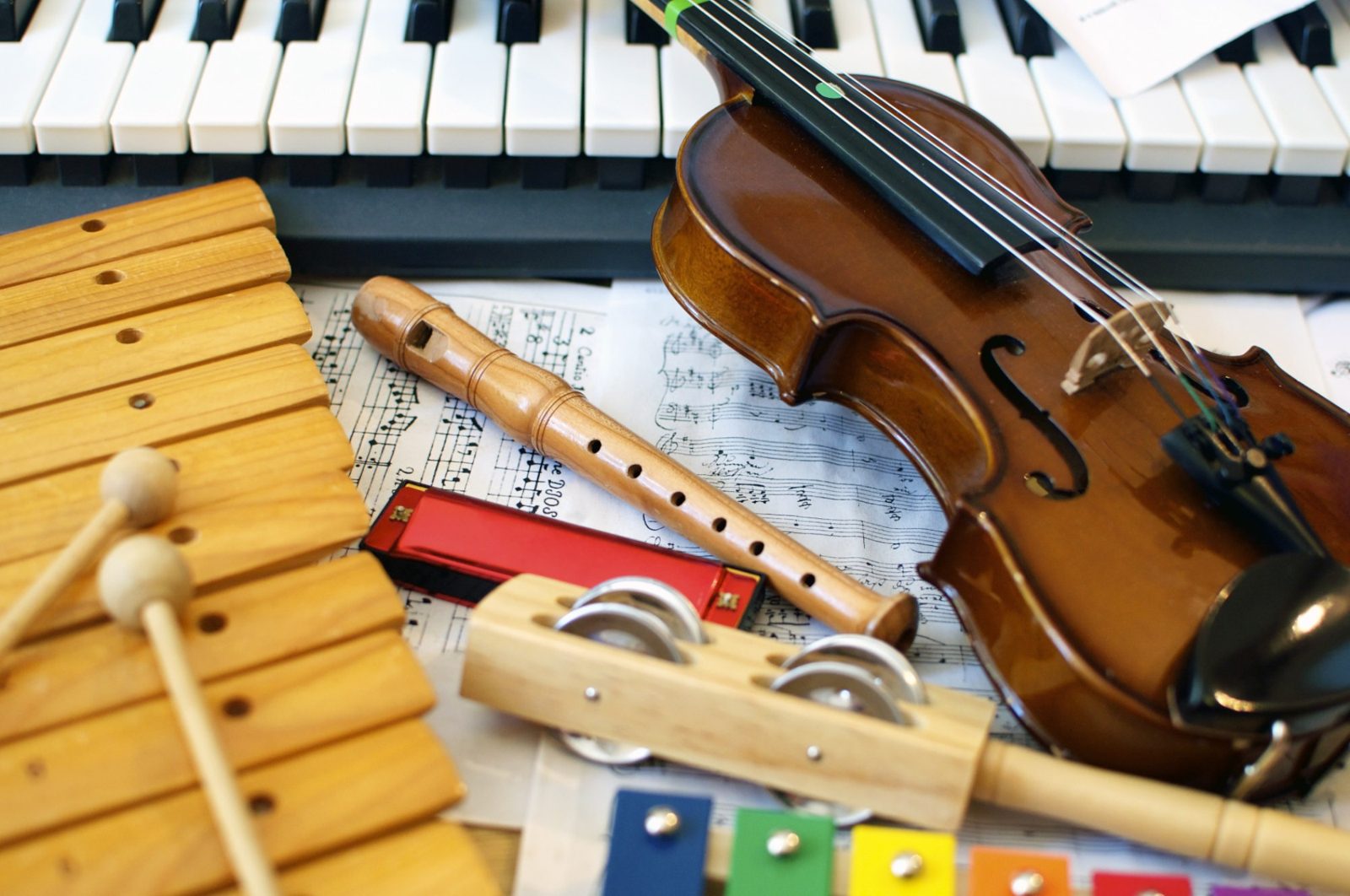
Our weekly music class — included at no additional cost — treats music the way the Waldorf tradition does: as daily bread, not a performance. Children sing, keep rhythm, move to melody, and handle real instruments, and they find the class both uplifting and deeply calming. Music is also stealth academics: rhythm and melody train the same auditory patterning the brain uses for language and early math.
Sports & PE
Every day includes big-body movement — running, climbing, balancing, and games that build coordination, strength, and the first sweet taste of teamwork. At this age, motor development and brain development are the same project: a child mastering a balance beam is wiring focus and confidence at once. Healthy movement habits planted now tend to last a lifetime.
Stretching & Mindfulness
Child-sized stretching and mindfulness moments teach something most adults are still working on: how to notice your own body and breath, and how to bring yourself back to calm. A few animal poses and slow breaths give children a tool they reach for on their own — before a transition, after a big feeling, ahead of rest time. It’s self-regulation taught gently, from the inside out.
Extracurricular Learning That Sticks
The Waldorf insight we borrow most is simple: children remember what they live far better than what they are told. Enrichment here isn’t a break from learning — it’s the glue that makes classroom learning permanent, because a concept that has been sung, planted, shaped, and climbed has been encoded a dozen ways. That’s why our enrichment is woven through every week — a rich range of options, with the flexibility to fit each child.
The Creative Minds Blend

Plenty of schools offer activities; what makes Creative Minds different is the architecture behind them. From Montessori we inherit an inherently structured advantage: every enrichment experience connects back to the classroom’s sequence and purpose — gardening feeds practical life, clay feeds writing hands, experiments feed the sensorial and math work — so nothing is random fun that evaporates by Friday.
From Waldorf we take the creative blend — rhythm, music, artistry, and reverence for imagination — that has been part of Creative Minds since our beginning. Structure without joy goes stale, and joy without structure goes nowhere; holding both at once is precisely what makes Creative Minds unique among Frisco preschools. Come watch a music class or a gardening morning and you’ll see the blend for yourself.
Side by Side: Why Each Needs the Other
We chose this blend with open eyes. Both philosophies are more than a century old, both are beloved worldwide — and each, practiced alone, has a well-known blind spot. Here is the honest comparison:
| What it does brilliantly | Where it falls short alone | |
|---|---|---|
| Montessori | A precise, sequenced path into real academics — reading, mathematics, and practical skills built hands-on at each child’s own pace. Materials self-correct, independence becomes a daily habit, concentration deepens, and progress is visible and measurable against Kindergarten-readiness standards. | Practiced strictly, it can run earnest and quiet: lighter on fantasy play, whole-group song, and the messy, dreamy side of childhood. Critics fairly note that a purely Montessori day can under-feed the imagination it so carefully protects from interruption. |
| Waldorf | Unmatched at wonder. Storytelling, song, rhythm, seasonal celebration, movement, and art for its own sake give children warmth, emotional security, and an imagination that stays lit for life. Nothing protects the magic of early childhood better. | Formal academics are deliberately delayed — reading often waits until six or seven. That suits some children beautifully, but it leaves many Texas families wanting measurable readiness on real school timelines, and its academic path is far less structured and comparable. |
| The Blend | Each philosophy’s gap is precisely the other’s gift. Montessori supplies the structure, academics, and discipline that Waldorf postpones; Waldorf supplies the music, imagination, and joy that a strictly Montessori day can lack. Blended, there is no blind spot left uncovered. | |
In practice, that’s exactly how our week is built: the disciplined Montessori work cycle anchors every morning — real materials, real sequence, real mastery — while the Waldorf thread runs through everything around it: the weekly music class, gardening’s seasonal rhythm, storytelling, art that belongs to the child, and movement that celebrates the body. A child at Creative Minds doesn’t trade academics for wonder or wonder for academics. They graduate with both: reading and counting ahead of schedule, and a head still full of songs, stories, and ideas of their own. That’s the blend — and it’s why we’d put our CASA graduates beside any in Frisco.