


Preschool social conflicts — two children wanting the same toy, a friend with a different idea, a group that must decide together — are not interruptions to learning. They are the curriculum through which children discover that other people are real: that others have needs, feelings, and perspectives of their own. Through hundreds of small negotiations, children learn to listen, express themselves, wait, compromise, and repair. These capabilities cannot be taught from a worksheet, and they are precisely what makes knowledge useful in the real world.
Part 9 of 14 in The Whole-Child Series · Previous: Emotional Development · Next: Discovering Strengths
The discovery hiding inside every squabble
Somewhere between the ages of two and six, every child makes one of the most consequential discoveries of their life, and almost no one marks the occasion: other people are real. Not real in the sense of physically present — babies know that — but real in the deeper sense. Other people want things. Other people feel things. Other people see the same situation differently, and their view is just as vivid to them as mine is to me.
Young children do not begin life knowing this. Early childhood is naturally, healthily self-centered — not as a character flaw, but as a developmental starting point. A toddler who grabs a toy is not being unkind; she genuinely has not yet built the mental machinery to hold her own wanting and someone else's wanting in mind at the same time. That machinery gets built the only way it can be: through hundreds of real encounters with other small people who inconveniently, wonderfully, want things too.
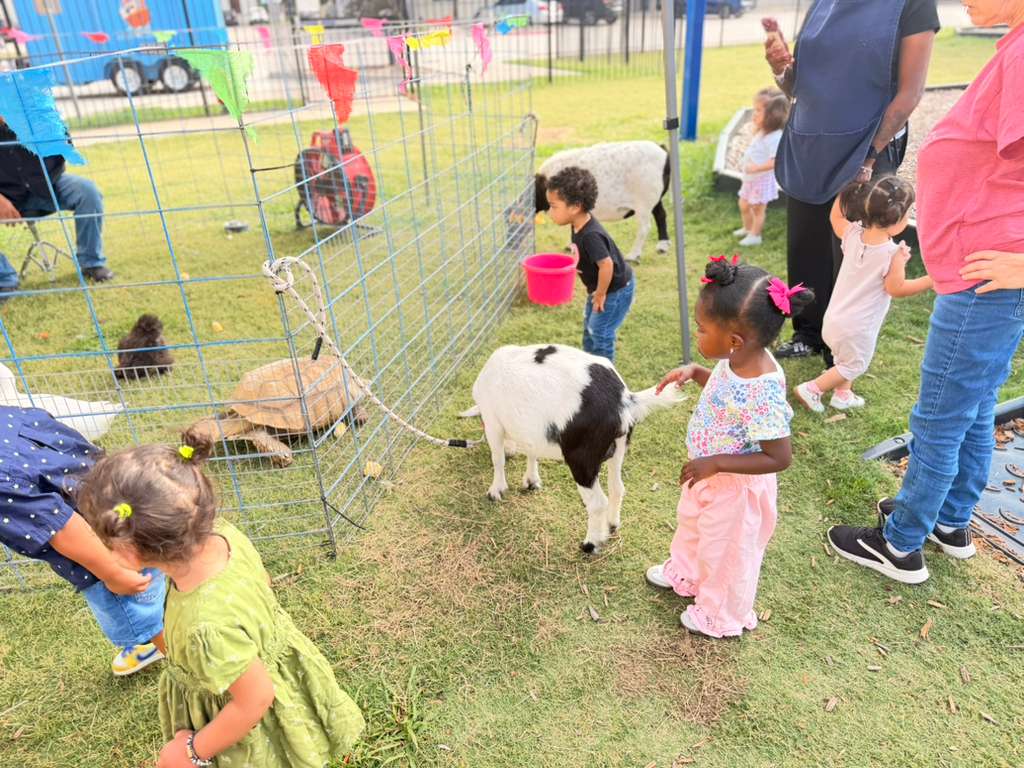
This is why the everyday frictions of a preschool classroom are not distractions from the "real" learning. Another child wants the same watering can. A friend has a different idea about how the fort should be built. Someone is crying, and it is unclear why. The group must decide what happens next. Each of these moments is a small, perfectly calibrated lesson in the most sophisticated subject a human ever studies: other minds.
What children are actually practicing
Watch a mixed-age classroom for an hour and you will see a social curriculum running continuously beneath the visible one. Children are practicing how to:
- Listen — not just wait for their turn to talk, but actually take in what another child is saying.
- Express themselves — turning a hot feeling into usable words: "I was still using that."
- Negotiate — "You can have it when I'm done" is a toddler's first contract, and it is real diplomacy.
- Wait — perhaps the most underrated skill of early childhood, because waiting for a turn means trusting that the turn will come.
- Read another perspective — noticing that a friend's face changed, and wondering why.
- Lead and follow — learning that both roles are honorable, and that a good game needs people willing to do each.
- Repair — coming back after a rupture: a spontaneous hug, a rebuilt tower, an offered shovel. Repair, more than harmony, is the true mark of social skill.
Notice that not one of these can be mastered through instruction alone. You can explain sharing to a three-year-old with perfect clarity, and the explanation will evaporate the moment a beloved truck is at stake. Social capability is not information a child lacks; it is coordination a child has not yet practiced — and like all coordination, it is built through repetition, feedback, and a coach who stays calm.
Why we don't rush to referee
When two children clash, the adult instinct is to arrive quickly with a verdict: who had it first, who must apologize, how long each turn will be. It is efficient. It restores quiet. And it quietly moves all the learning from the children to the adult.
In Montessori classrooms, teachers try something slower and more valuable. They come close, ensure everyone is safe, and then help the children do the work themselves: "Two children, one watering can. What could we do?" Sometimes the negotiation is clumsy. Sometimes the solution the children invent — "we'll both hold the handle" — is one no adult would have chosen, and it works anyway. The point is not the elegance of the outcome. The point is who produced it.
Two four-year-olds, Leo and Priya, both reach the snack table's last banana at the same moment. Both hands land on it. Both faces darken. The teacher, nearby, says only: "One banana. Two friends." A long pause. Leo: "We could cut it." Priya, cautiously: "I get the big half." Leo, after genuine deliberation: "Okay. But I do the cutting." The teacher hands them the child-sized banana slicer, and the treaty is executed with the solemnity of a state occasion.
This mirrors what the previous article in this series said about staying with a problem: the adult's job is not to erase difficulty but to keep children company inside it. Social difficulty is no exception — it is simply the version of the problem that talks back. The approach pairs naturally with gentle discipline at home, where limits are held warmly and conflicts become teaching moments rather than trials.
Community: rights and responsibilities, child-sized
There is a larger arc here, beyond individual squabbles. Over months in a classroom community, children absorb something structural: being part of a group involves both rights and responsibilities. I have a right to my work being undisturbed — which is why I don't disturb yours. I have a right to be spoken to kindly — which is why unkind words matter. Younger children get help from older ones, and in a year or two, they will be the older ones doing the helping. A mixed-age classroom makes this cycle visible: children experience both sides of care within their own short memory.
Research on child development consistently finds that these early social capacities — cooperation, perspective-taking, self-regulation in groups — are among the strongest foundations for later wellbeing and even academic success. That should not surprise us. Nearly everything meaningful an adult does — a marriage, a team, a company, a friendship — runs on exactly these skills. Intelligence gives a person ideas; social capability is what lets those ideas reach other people. If you are currently comparing programs, this is one of the most revealing things to watch for on a visit — our guide to choosing a daycare includes questions that surface how a school actually handles conflict, not just how it describes itself.
At home, you can try
- Narrate perspectives out loud. "Your brother is sad because he wanted a turn too" builds the habit of imagining other minds — no lecture required.
- Let small negotiations run. If siblings are working out a dispute and no one is being hurt, resist refereeing for sixty seconds. You may be surprised.
- Model repair. When you lose your patience, circle back: "I'm sorry I shouted. I was frustrated. Let's start again." Children who see repair learn that relationships survive rupture.
- Give real roles in family life. Setting the table for everyone, not just oneself, is social education: my effort serves people I love.
- Host smallness. One friend for one hour teaches more negotiation than a large party — fewer children, more actual interaction.
Keep reading
- Emotional Development: Learning to Stay With a Problem — the previous article in this series, on frustration as the raw material of resilience.
- Discovering Your Child's Strengths — Without Putting Them in a Box — next in the series: how breadth of experience lets each child's gifts surface.
- Gentle Discipline That Works — the home version of calm, connected conflict coaching.
- How to Handle Toddler Tantrums — for the moments when the social world is simply too much.
- How to Choose a Daycare — what to ask and watch for when evaluating a program's social environment.
- Is My Child Ready for Kindergarten? — why social readiness weighs as heavily as letters and numbers.
The best way to understand a classroom community is to stand in one while it hums along — we would love to have you visit and see our classrooms for yourself.