



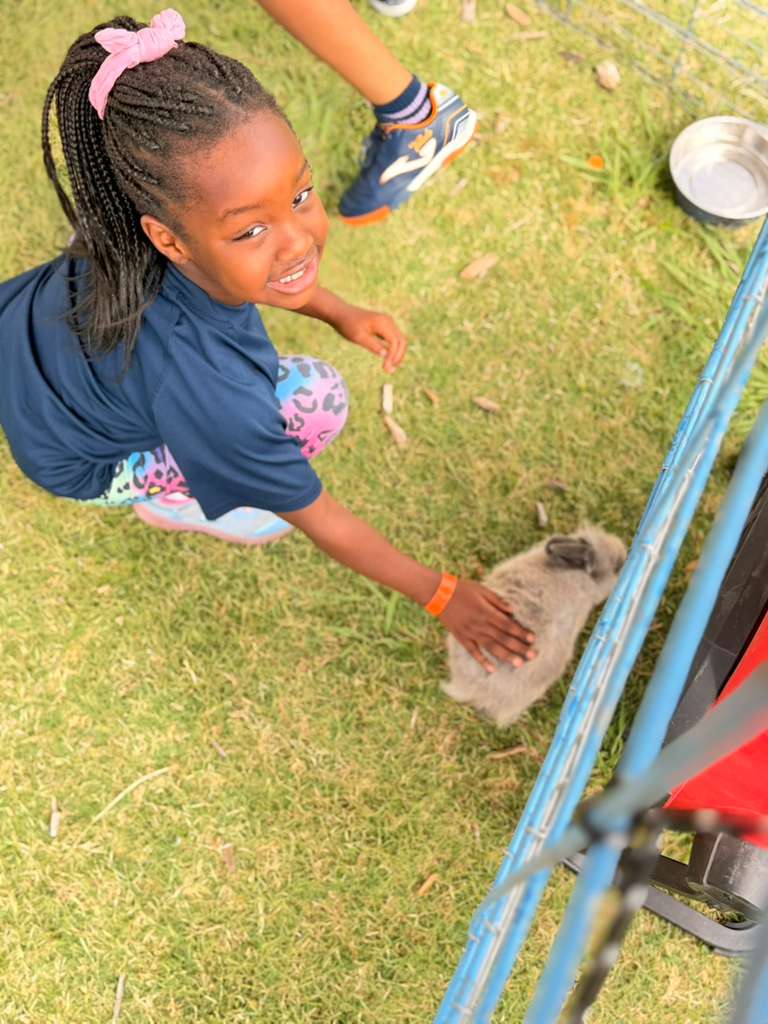
Sibling rivalry isn't your children being bad or your parenting failing. It's normal competition for your love, made loud by small brains that can't yet use words — under five, the impulse control simply isn't built yet, so jealousy comes out as a shove. You can't split yourself perfectly evenly, and chasing exact fairness teaches children to keep score. What works: name the feeling instead of forbidding it, guard a little protected one-on-one time for each child, and coach the fights rather than refereeing them (assigning blame tends to intensify conflict — but so does staying out of it entirely). Regression after a new baby is a strategy, not a breakdown, and punishing it backfires. Most of this is a phase. Get help if anyone's safety is at risk or it hasn't eased in about six months. (Not medical advice.)
The problem, in real voices
A three-year-old who had been potty-trained for a year started having accidents the week the new baby came home, and asked for a bottle. His parents, who had just finished celebrating the end of diapers, quietly wondered whether they'd broken something.
A mother sat breastfeeding the infant while her toddler launched himself off the sofa. She felt she was failing both at once — unable to give the baby peace or the toddler safety, and pinned to the couch while both went wrong.
One family's four-year-old genuinely adored his newborn sister. He was gentle with her, proud of her — and had become oppositional with everyone else: refusing directions unless told sternly and repeatedly, doing the opposite of what was asked, clinging to his father, melting down over small things. The psychologist's reframe surprised them. It wasn't jealousy of the baby. It was about wanting attention, and having suddenly to share the family's resources.
Another mother's daughter met her new brother and suggested, quite calmly, that they throw the "baby trash" out. (Years later, around nine, she'd come around — she valued him as a companion, though she still thought he was too loud.)
And one parent described the version that frightens people: a four-year-old who kept hitting her and pushing the baby down, until she no longer felt she could leave the two of them alone in a room together.
Notice how differently rivalry can look. One child attacks the baby, one is sweet to the baby and hostile to the parent, one quietly regresses. There's no single face to it — which is why so many parents miss it in their quietest child.
What's really going on underneath
The engine is simple, and it isn't really about the sibling. The feeling of competition sits at the root of sibling rivalry — competition for a resource that just became scarce: your attention, your lap, your arms, your time. And it hits firstborns hardest for the obvious reason that they had 100% of it and are now measuring against a former monopoly. That's a real loss, not an imagined one.
Which reframes the whole problem: the older child isn't objecting to the baby. They're objecting to what happened to you. A small loud newcomer took the lap. The parent-child bond, which the child depends on absolutely, suddenly feels contested — and the child has no way to check whether it's still safe.
Then the developmental fuel. At four, the prefrontal cortex — impulse control, planning, emotional regulation — is years from mature. When a child that age is overwhelmed, they lack the neural wiring to pause, weigh consequences, and choose a calmer response. Under five they also lack the vocabulary to voice jealousy or fear safely. So it comes out through the body, because the body is the only channel currently installed.
Several factors make it more intense, and none of them are anyone's fault: siblings less than two years apart tend to have more rivalry; same-sex sibling pairs show higher conflict; sharply different temperaments or developmental stages create friction; and a long-term illness or special need in one child intensifies the other's sense of exclusion. Birth order plays in too, with middle children often navigating the hardest structural position.
And here's the part most guides skip. There are two layers of sibling conflict. The obvious one is externalized — fighting, mocking, arguing, tattling. The hidden one is internalized: the child who quietly feels insignificant or incapable next to a sibling, the shy one who withdraws and secretly seethes, the sibling of a chronically ill child who feels left out and then guilty for feeling it. Parents manage the loud version because it demands management. The silent one just accumulates.
Finally, worth saying plainly: parents are part of the system. Children are always watching. Aggressive parenting tends to be mirrored in sibling aggression, and hostility between the adults — plus general family stress like a move, a job loss, an illness — raises the temperature between the children.
A Worry Barely a Century Old — Now Concentrated
Here's a genuinely surprising piece of history: sibling rivalry as a parenting worry is barely a century old. Parenting manuals from the 1830s fretted about sloth, boasting, precocious sexuality, and carelessness — and said essentially nothing about sibling jealousy. It wasn't that children got along better. It's that nobody was watching for it.
The concept crystallized in the late 1920s, when experts began treating sibling jealousy as a central issue and — importantly — reframed a child's anger at a new baby as a normal response rather than a defect to be stamped out. That reframe is the one you're still benefiting from today.
Why then? Historian Peter N. Stearns points to structural family change: families got smaller, parenting got warmer and more affectionate, and children were no longer assigned the care of younger siblings. Instead of bonding together against strict discipline, children began competing directly for their mother's affection. The rivalry didn't appear out of nowhere; the family reorganized around a scarcer, more emotionally central prize. By the 1940s sibling jealousy ranked as parents' third most pressing concern — concentrated notably among white, suburban, middle-class parents with two children, and rated far less urgent by wealthy urban and poor families.
Which sets up the modern irony neatly. The trend Stearns named — warmer, closer, smaller families — has only intensified. Modern intensive parenting doesn't dilute the competition; it concentrates it, because there are fewer children competing more directly for one or two very attentive adults. And there's a newer competitor in the room that no 1920s child faced: the parent's phone. A child who has already lost the lap to a newborn is also, several times an evening, losing the parent's eyes to a screen. That doesn't create rivalry, but it does shrink the very resource the children are fighting over.
Where technology genuinely helps: a baby monitor lets you give the older child genuinely undivided attention in another room, which is the thing they actually want. And shared photo streams or a quick video message let a working or non-resident parent give the displaced older child individual I'm thinking of you contact during the day, which is precisely the currency in short supply.
How parents usually try to fix it — and the catch
- Treat them exactly the same — buy two of everything, split it down the middle. (All ages.) The upside: it's motivated by real fairness, it heads off the loudest complaint, and it does prevent a few fights. The catch: children will always find an inequality — they are extraordinary auditors — and identical treatment ignores the fact that children have genuinely different needs at different stages. The expert consensus is to treat fairly, not equally: tailor to each child's actual needs, and understand that treating children differently isn't favoritism. It signals that you see each of them as a distinct person. The deeper backfire is cultural: chasing perfect equality teaches your children to keep score, and a scorekeeping habit outlasts childhood.
- Referee every fight — "who started it?" (Toddler and preschool, and well beyond.) The upside: it feels responsible, it stops the noise, and someone does need to intervene when a smaller child is being flattened. The catch: acting as judge — investigating blame and issuing verdicts — tends to intensify conflict, because it hands the children a new game: winning the trial rather than solving the problem. There's also a documented favoritism trap: parents tend to side with the younger child, and when mothers favor the younger during conflict, siblings end up interacting less with each other. But — and this matters — total non-intervention isn't the answer either. Children are more likely to resolve conflict when parents intervene to some extent; left entirely alone, the older or stronger sibling simply dominates and neither child learns compromise. The target is narrow: mediate, don't adjudicate.
- Punish the jealous behavior — the baby talk, the wet pants, the "send him back." (Toddler and preschool.) The upside: it feels like holding a standard, and the regression is genuinely maddening when you just finished potty training. The catch: the guidance here is unusually direct — avoid punishment for regressive behaviors. Punishing an older child for jealousy breeds resentment toward the sibling, which is the exact opposite of the goal: you've made the baby the reason they got in trouble. And suppressed feelings don't evaporate. As Adele Faber puts it, what isn't expressed outwardly goes into the subconscious, resurfacing later as stomach aches, nightmares, or aggression. The legitimate exception is safety. A firm no-hurting, no-name-calling household rule is entirely appropriate. You stop the harm. You don't punish the feeling.
How two parents often experience it differently
Averages from research, not prescriptions — any parent of any gender can occupy any of these positions, and plenty do.
The clash worth naming is the intervention line: the let them work it out parent versus the someone's going to get hurt, I'm going in parent. Here's the useful part — they're each half right, and the research says so. Over-refereeing inflames conflict; total non-intervention lets the stronger child dominate and teaches nobody to compromise. Neither instinct is wrong; both are incomplete. So the fix isn't for one of you to win the argument. It's to agree in advance where the line sits — what counts as an ordinary squabble to let ride, and what counts as safety or cruelty that gets an adult — so the children receive one consistent rule rather than two competing ones they can shop between.
There's a broad tendency for one parent to lean toward coaching and stepping back while the other leans protective and interventionist, and both stances have something to contribute: the coach builds skills, the protector prevents damage. The published research on parenting-style asymmetries between mothers and fathers in sibling conflict is genuinely thin and mixed, so it's not worth building a strategy on. What is well-supported is the modeling effect, and it applies to every family configuration: conflict and hostility between the adults worsens sibling relationships, because children copy how the grown-ups handle disagreement. Your children are learning conflict resolution primarily by watching you and your co-parent, not by being lectured about sharing.
For single parents, both stances live inside one exhausted person, and the whiplash risk is internal — you referee hard on a depleted Tuesday and ignore everything on Thursday. Permission to pick one consistent approach and hold it beats alternating between two good ones. For same-sex, blended, and multigenerational families, the same "agree on the intervention line" fix applies, and it's worth extending it explicitly to grandparents and sitters, who often referee by a different rulebook entirely.
Better ways that actually work — introduced gently
The common thread: the feeling is allowed, the hurting isn't — and your job is less judge than translator and coach.
1. Name the feeling instead of fixing or forbidding it
The mechanism is straightforward: a young child cannot yet turn a large feeling into words, so it becomes an action instead. Give the feeling language and it stops needing to be a hit. As Philippa Perry puts it, put the child's feelings into words so she can learn to put her feelings into words rather than into undesirable actions. And crucially — you are not required to fix the feeling. Hear it and be with it. We all prefer to be felt with rather than dealt with.
In practice: get to eye level and stay calm, because children mirror your composure and a loud adult raises the whole room. Reflect the feeling out loud, generously and without hedging — "you wish you could have me all to yourself again." Faber's script goes even further into the taboo: "Do you sometimes wish it could go back to the way it was when you were the only one?" That question is startling to ask and often produces immediate relief, because you've said the thing your child feared was unsayable. Then validate the feeling without endorsing the behavior: feelings allowed, hurting not. And practice naming emotions during calm ordinary moments — "you're frustrated the tower fell" — so the skill exists before you need it in a crisis. Toddlers need you to supply the whole sentence; preschoolers can start finding their own words if you leave a pause. Introduce it before the baby arrives if you can, or at least outside the flashpoints, so "name it" is already normal rather than a strange new thing you do when they're angry. The saboteur is rushing to reassurance — "but you love your sister!" — which is a correction wearing the costume of empathy, and it teaches the child that this particular feeling is not welcome here.
2. Protected one-on-one time — and "loved uniquely, not equally"
If rivalry is competition for a scarce bond, the direct intervention is to make a slice of that bond uncontested. This is also where the fairness reframe pays off, and Faber's line is the one to keep: to be loved uniquely is to be loved enough. "I love you both the same" invites measurement. "I love you in a way I love no one else" doesn't.
Concretely: protect a small daily slice with the older child — it does not need to be long, because a displaced child is measuring focus, not minutes. Use the baby's nap or the other parent's watch to make it genuinely uninterrupted, phone elsewhere, because half-attention is what they're already grieving. Let the older child be the oldest: real, small jobs helping with the baby, and separate playdates with younger children where they get to lead and feel large. Celebrate individuality and actively avoid family labels — the smart one, the wild one, the easy one — because a label handed to one child is a role denied to the other, and children defend their assigned territory. Name multiple strengths in each of them, out loud, often. Frame the time as a standing ritual rather than a reward: "our Tuesday walk," not something earned or lost, so it can never become one more thing the baby took. This works from toddlerhood up, and for a child under three the ritual matters more than the content — the same walk, the same order, every week. The saboteur is cancelling it for the baby. Cancel it twice and you've taught precisely the lesson you were trying to disprove.
3. Coach the conflict — mediate, don't adjudicate
The principle here is that a fight is a skills lab, and the goal is a pair of children who can eventually run the process without you. That means resisting the verdict, which is the hard part, since the verdict is faster and children explicitly request it. The Montessori framing adds the other half: look for the root cause and change it, and give children time to resolve things between themselves.
The sequence: separate while heated, coach only once calm — no learning happens in a flooded nervous system, in children or adults. Skip "who started it," which is unanswerable and rewards the better lawyer, and ask the neutral "What happened here?" Get both perspectives and validate each one out loud, in front of the other child, which is often the entire remedy. Then hand the problem back: ask them to generate a solution, so they own the method next time. Teach the micro-skills offline in calm moments — how to ask to join a game, how to say no kindly, how to guess what the other person wanted, how to take a break and breathe. Then praise cooperation loudly and specifically, because reinforcing good play works considerably better than punishing fights, and most children get far more attention for conflict than for peace. Discipline privately when you must, never shaming one child in front of the other. And consider a light weekly family meeting with agreed house rules — no hitting, no name-calling — that everyone signs onto. Introduce the meeting as a fun ritual with snacks before you ever use it to settle a conflict, so it isn't experienced as a tribunal. This is preschool and up; below three, you're mostly separating bodies and narrating feelings. The saboteur is stepping in to deliver the fair answer when they're two sentences from finding one themselves.
From the child's side
Philippa Perry offers the analogy that lands hardest, and it's worth sitting with: imagine your spouse came home with a second spouse and told you how lucky you were to have a fellow wife, and to please get along. That is the felt reality of a new sibling. Not a gift — a rival for the love you depend on.
So the hitting and pushing aren't meanness. They're displacement pain, and a bid to recover an exclusive bond that vanished without explanation. Your child used to have you and their other parent entirely, and now has to share you — with someone who cannot even be resented out loud, because everyone keeps saying how wonderful the baby is.
Regression makes perfect logical sense from inside. The baby gets babied. The baby gets carried, fed, forgiven, cooed over. So becoming a baby is a rational strategy for recovering the attention — the bottle, the baby talk, the wet pants, the night wakings are not a collapse in development. They're a hypothesis being tested. Which is exactly why punishing them fails: you're punishing a child for the crime of correctly identifying what gets rewarded in your house.
And don't miss the quiet ones. Not every child fights out loud. Some sit alone feeling insignificant or incapable beside a sibling; some withdraw and seethe privately; some become conspicuously, exhaustingly good. Their war is internal and produces no incident to respond to, which means it's the version most likely to go unaddressed for years.
What every one of them needs from you is the same, and it's smaller than it sounds: to be felt with rather than dealt with. Heard, not fixed, not corrected, not punished for the feeling underneath.
And the timeline, offered as genuine comfort: the same child who proposes throwing the baby out at three can, by eight or nine, treasure that sibling as a companion. The love is coming. It's just on a much slower clock than you'd like.
How Mixed-Age Classrooms Defuse the Rivalry
There's a structural reason a good mixed-age program helps with rivalry specifically, and it's elegant: the multi-age classroom — typically three-year spans — is built on the exact dynamic that defuses it. Every child is, at some point, the smallest and the largest, the one seeking help and the one giving it. Children rotate through both roles rather than being frozen as "the big one" and "the little one," which is precisely the trap that hardens at home. Younger children learn by watching and being inspired by older ones; older children gain real confidence — and consolidate their own learning — by leading and teaching, which rebuilds the self-esteem that rivalry erodes.
A good program adds trained eyes that are prepared to nurture all the relationships in the room, not just break up fights, and that's where the hidden version of rivalry finally becomes visible — a teacher watching all day is far more likely to notice the child who has gone quiet than a parent managing an infant at home. And where real siblings attend together, a thoughtful program supports either arrangement: working near each other, or building separate friend groups, because healthy independence should be allowed rather than forced togetherness in either direction. The steady routines and cooperative, low-competition environment also model at school exactly what you're attempting at home.
A weak setting undercuts it in predictable ways: an approach mismatched with yours — the center punishing the feeling while you're naming it — gives the child whiplash, which is the same inconsistency that inflames conflict at home. Thin communication means the internalized struggle stays invisible until it's large. And staff turnover breaks the very continuity that makes a second set of eyes useful, since eyes only help if they stay long enough to notice a pattern.
Run the communication three ways. You → the center: the trigger and the plan — "new baby three weeks ago, he's regressed, we're naming feelings rather than punishing, please don't shame the accidents." You can also raise placement: whether siblings should share a classroom is a legitimate conversation based on what you see at home. The center → you: what they observe day to day — withdrawn at drop-off, aggressive at circle time, clingy, or leading younger children kindly — and, when a pattern emerges, a shared behavior plan built with you and the classroom staff rather than delivered to you. And the child, looped in: the same simple language in both places — feelings are okay, hurting isn't; you're loved uniquely; here's how we solve it — so they hear one consistent story from every adult in their life. That single consistent message across both buildings is the goal, and it does more than any individual technique.
When Rivalry Needs More Than Time and Patience
This is not medical advice — when in doubt, talk to your pediatrician or a child mental-health professional.
The reassurance first, because it's the accurate part: fighting, tattling, teasing, jealousy, and new-baby regression are developmentally expected, and physical outbursts under five trace to an immature prefrontal cortex rather than a broken child or a failed parent.
Worth a professional conversation when:
- Rivalry signs persist beyond about six months — regression, aggression, or distress that isn't easing with time and the approaches above.
- Safety is genuinely at risk — real potential for injury, or a situation where you cannot safely leave the children in a room together. That's not a discipline problem to solve alone; it's a supervision reality plus a reason to get support.
- Aggression arrives with anxiety, depression, or visible stress. A clinician can help here — behavioral therapy and building coping strategies address both the aggression and the conflict.
- The hidden version shows up — a child who withdraws, seems to feel insignificant or incapable, or is quietly seething. Internalized distress deserves exactly as much attention as the loud kind, and gets far less.
- Conflict is extreme and relentless, since underlying conditions such as ADHD, anxiety, or mood difficulties can intensify sibling conflict considerably and are worth ruling in or out.
Start with your pediatrician, who can refer into child and behavioral health. And if you're in the U.S. and your own stress in the middle of this has tipped into something heavier, the 988 Suicide & Crisis Lifeline (call or text 988) is available 24/7 — parenting two children in open conflict is genuinely depleting, and your own support counts as an intervention for them.
Every Family Is Different — Trust Yourself
The experts here don't fully agree with each other, which is itself informative. One emphasizes naming feelings, another building skills, another protecting one-on-one time. The right mix depends on this child's temperament, the age gap, and your family's shape and values — and the disagreement among specialists is your permission to choose.
Even the central piece of advice admits it: treat fairly, not equally is an explicit statement that there's no formula. Fairness is judgment, not arithmetic, and it has to be recalculated as your children change.
And keep the historical perspective, because it's freeing. The very concept of sibling rivalry is barely a century old and arrived alongside one particular family model. A lot of the "shoulds" you're measuring yourself against are cultural artifacts, not laws of nature. Your grandmother's siblings fought too; nobody was writing it down.
What survives across every source isn't a technique at all. It's a stance: be with your child in the feeling, stay calm more often than not, hold the safety line, and keep showing up. You can do all of that imperfectly and still get it right — which is fortunate, because you are going to do it imperfectly, in a hallway, holding a baby, at the end of a long day. The fighting is loud, and it is temporary, and the relationship you're refereeing today is one they'll likely be grateful for long after you've stopped keeping score.
Related struggles
- The hitting and pushing, in full → Toddler hitting and biting.
- Holding the safety line without punishing the feeling → Gentle discipline that works.
- The big feelings underneath it all → How to handle toddler tantrums.
- When potty training goes backwards → Potty training tips.
- Whether the regression is something more → Is my child's development normal?.
- What two children do to the adults → The mental load of motherhood and Parental burnout.
- Books that help a child meet a new baby → our best books for toddlers, and how mixed-age classrooms work → early childhood education methodologies.
Sources: Cleveland Clinic, "10 Tips for Dealing With Sibling Rivalry" (Dr. Susan Albers, PsyD — competition at the root, firstborn impact, treat fairly not equally, avoiding labels, family meetings, private discipline); Nationwide Children's Hospital, "Sibling Rivalry" (regression patterns, age proximity and same-sex dyads, avoiding punishment for regressive behaviors, small manageable tasks, the six-month guideline, shared behavior plans); WebMD, "Prevent Sibling Rivalry When Bringing Home Baby" (Adele Faber, Siblings Without Rivalry — "loved uniquely," the wish-it-was-just-us script, suppressed feelings resurfacing, the long arc to friendship); Philippa Perry, "Siblings" (the second-spouse analogy, putting feelings into words, "felt with rather than dealt with"); Psychology Today, Parenting Translator, "7 Evidence-Based Ways to Stop Sibling Fighting" (intervene to some extent, the favoritism finding, "what happened here," teaching skills in calm moments, praising cooperation, modeling); Fathers.com, "Dads & Sibling Conflicts: Be Coach More than Referee"; JSTOR Daily, "The Invention of Sibling Rivalry" (on historian Peter N. Stearns — the 1830s manuals, the late-1920s emergence, smaller warmer families, the 1940s demographic pattern); Clay Center for Young Healthy Minds, Massachusetts General Hospital, "Managing Sibling Conflicts: The Obvious and Hidden Battles" (internalized conflict, birth order, family stress, underlying conditions); Montessori Academy (root-cause observation, letting children resolve conflict); Villa di Maria Montessori and Rockridge Montessori (mixed-age classrooms — role rotation, older children teaching, supporting real siblings together or apart); AAP-based guidance on aggression and prefrontal development via syndicated parenting coverage; Gulf News (the reader case of the four-year-old whose rivalry landed on his parents rather than the baby). Stories are drawn from real parents' experiences; names and identifying details have been changed for privacy.